Passenger audio & systems – WESOLiTvaudiosys
WESOLiTvaudiosys is a project-specific audio information system for vehicles, enabling passengers to access multilingual audio information whilst on the move.
The system combines a central unit, control panels and data processing into an integrated solution for sightseeing, tourism and operator applications.
Audio content is controlled automatically based on vehicle or position data. This ensures that audio information is provided in sync with the journey and location, without the need for manual intervention.
System solution · technical coordination · project-specific implementation
WESOLiTvaudiosys is a modular audio information system for passenger transport vehicles.
Passengers can select their preferred language via decentralised control units and listen to audio information via headphones. The audio content is provided and controlled centrally and distributed to the control units via a digital system.
The audio content is controlled automatically based on vehicle or position data.
The audio sequences are triggered based on position. In the standard version, the IBIS system already installed in the vehicle is used for this purpose. IBIS codes (stop or location information) are read via an interface in the central unit and assigned to the corresponding audio sequences.
Upon reaching a defined location, the appropriate audio sequence is automatically made available to all control panels. Passengers select their language and volume individually on the control panel.
Optionally, position-dependent control can also be implemented via GNSS/GPS. This function is hardware-ready but is not part of the standard version and can be implemented on a project-specific basis upon request.
Product overview
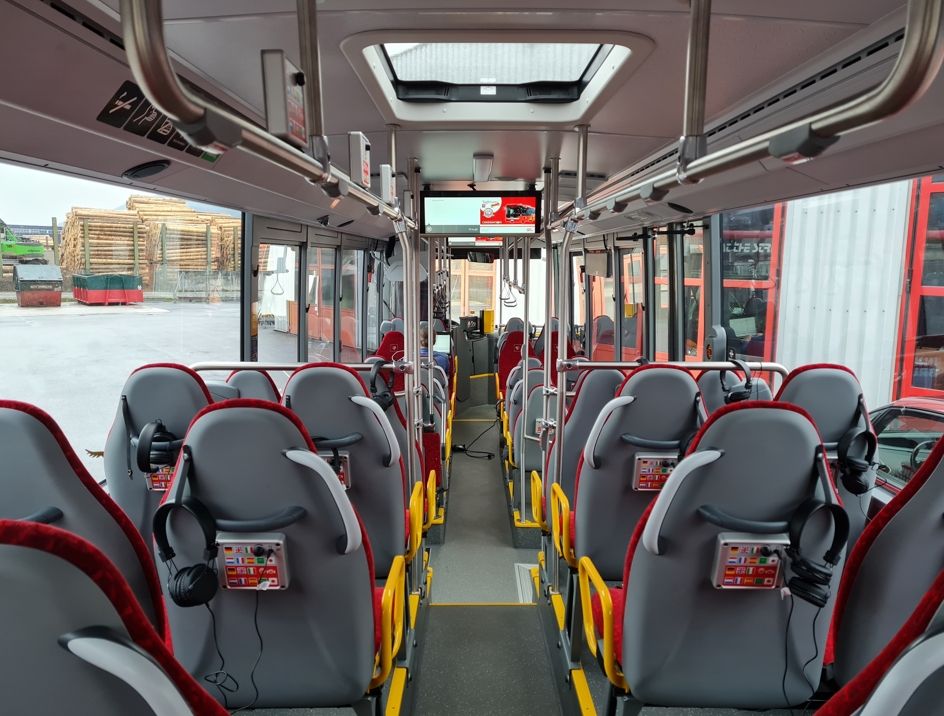
WESOLiTvaudiosys
Modular audio information system for multilingual passenger information in vehicles.
Developed and manufactured in Austria.
A coordinated system comprising a central unit, control panels and data processing, customised for installation in vehicles and integration by the vehicle manufacturer.
Retrofitting into existing vehicles is generally possible, but requires an individual assessment.
Sightseeing buses, tourist vehicles and passenger audio systems, as well as project-specific operator solutions in passenger transport.
Use in vehicles with guided route information and multilingual audio output for passengers.
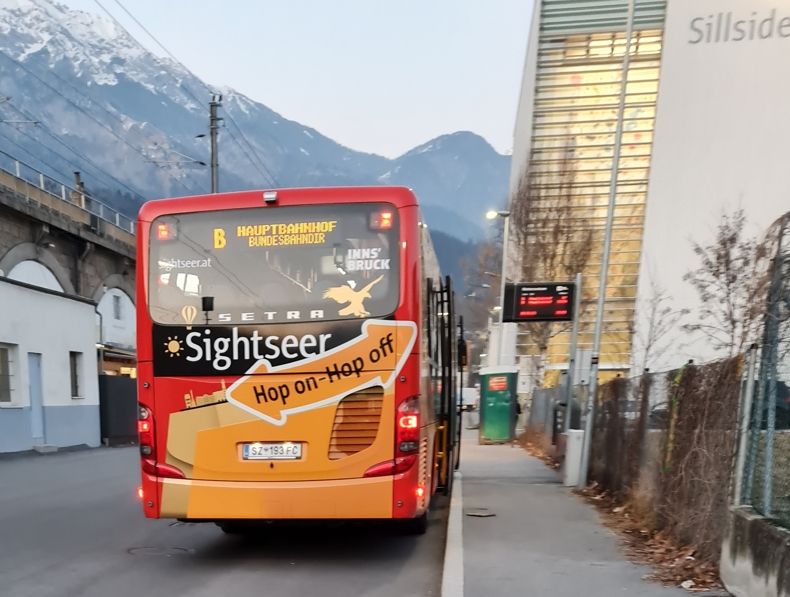
System architecture
The WESOLiTvaudiosys consists of several coordinated system components. The specific implementation is project-specific.
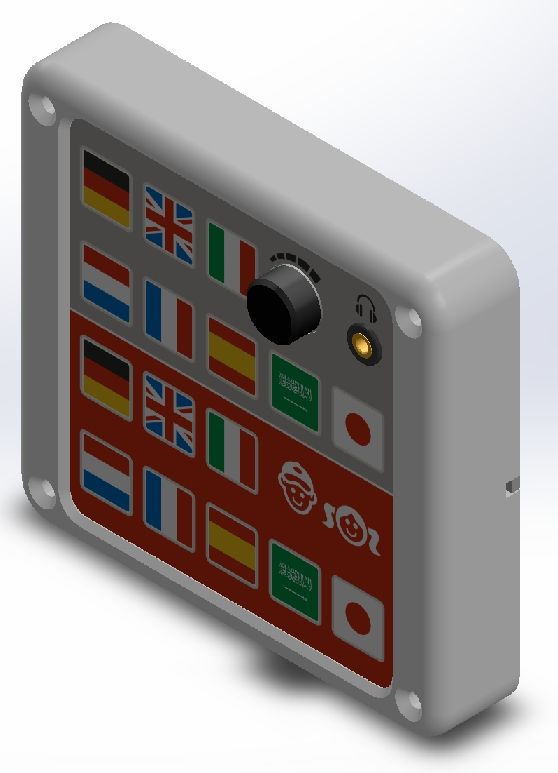
Control unit for voice selection, volume control and headphone connection in the passenger area.
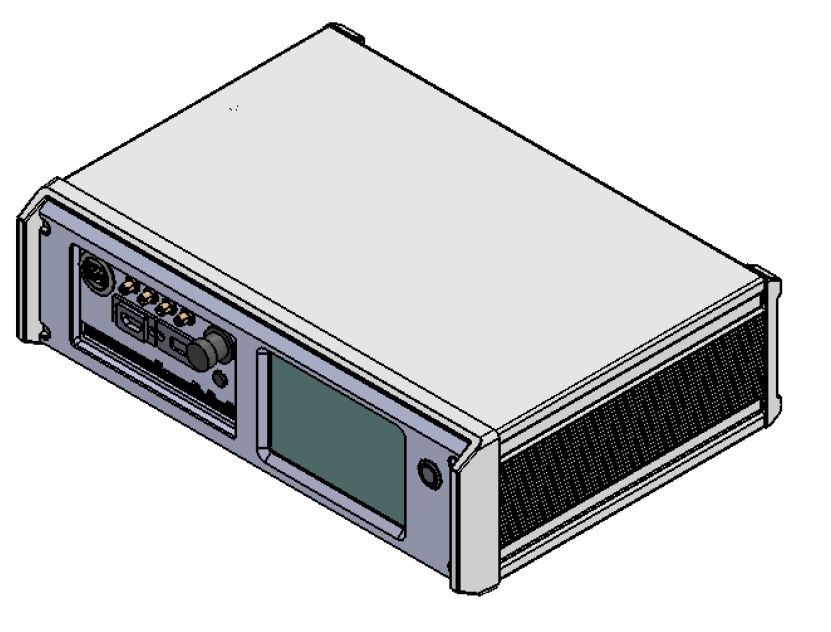
Central unit for the provision, control and distribution of audio information to the control panels.
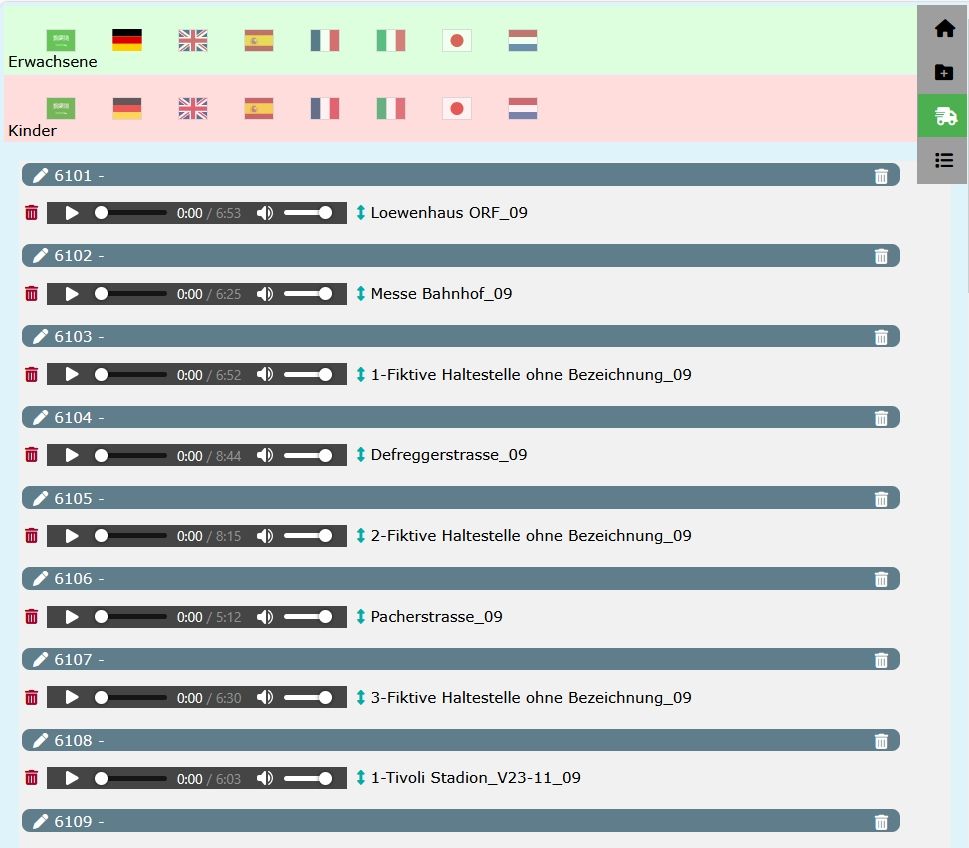
Software environment for compiling and organising audio sequences for the system.
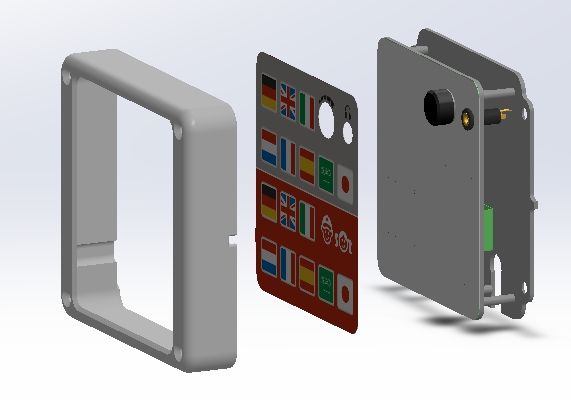
WESOLiTvaudiosys-AP control unit
The control unit allows passengers to select their preferred language, adjust the volume and listen to audio via headphones. Depending on the model, internal and external headphone jacks can be used simultaneously.
The membrane keypad can be customised to suit specific projects. The design, symbols and language settings can be individually adapted via the decorative film. Changes are assigned accordingly in the WESOLiTvaudiosys Editor.
A key advantage lies in the interchangeability of the decorative film: adjustments can be implemented cost-effectively without having to replace the entire control panel.
The WESOLiTvaudiosys-AP is not just a control element, but the visible interface between the passenger and the audio system.
Thanks to interchangeable decorative film, a robust housing design and project-specific configuration, the control unit can be adapted to different vehicles, voice concepts and operator requirements.
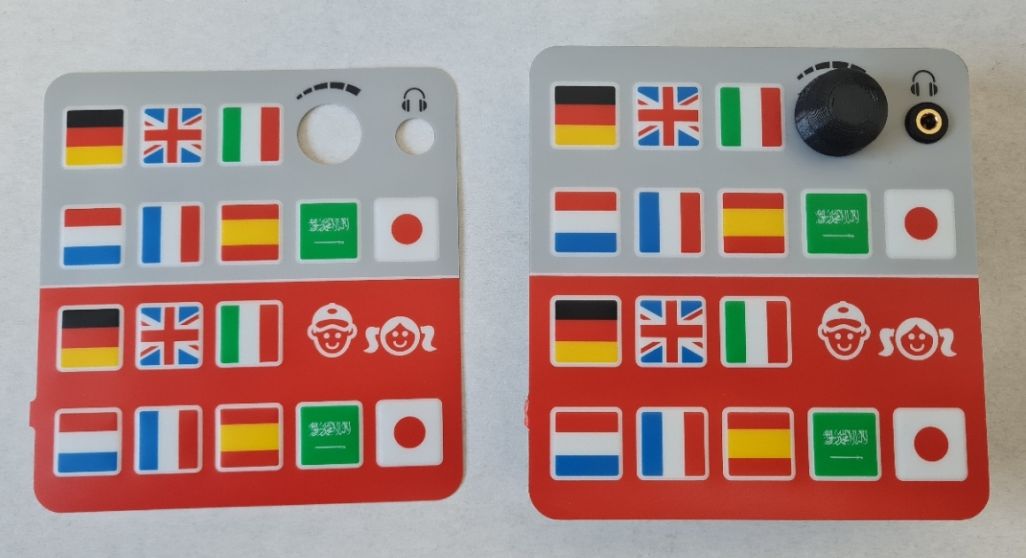
Passengers can select their preferred language directly on the control panel and adjust the volume to their liking.
Design, symbols and language settings can be customised cost-effectively. Content is assigned via the WESOLiTvaudiosys Editor.
The decorative film can be replaced without tools after removing the housing. The adhesive surface is designed for safe operation and repeated adjustments.
Benefits & advantages in operation
Designed for operator environments with a large number of passenger seats, multiple languages and the requirement for a robust, serviceable system solution.
The digital system architecture significantly reduces the amount of cabling required compared to earlier analogue multi-channel systems.
Audio sequences are provided based on vehicle or position data, tailored to the location.
Passengers select their preferred language directly on the control panel. Audio is output via headphones.
Power supply, communication and control are managed centrally via the WESOLiTvaudiosys-CU. When the CU is switched off, the control panels are also inactive.
The system can detect faulty control panels and, in the event of a fault, enable data transmission from both sides of the ring loop.
Audio data is transmitted digitally from control unit to control unit without any loss of signal quality over the length of the cable.
Once the language has been selected, the audio signal is generated directly in the control unit and transmitted via the short path to the headphone socket.
This short analogue signal path ensures a particularly high and consistent sound quality.
The decorative film allows for adjustments to the design, symbols and language settings without replacing the entire control unit.
Additional interfaces are pre-configured on the hardware side and can be implemented on a project-specific basis upon request.
Technology
System principle
Application
Audio information system for passenger transport vehicles
Control unit
WESOLiTvaudiosys-AP with voice selection, volume control and headphone jack
Central unit
WESOLiTvaudiosys-CU for control and audio distribution
Audio distribution
Digital transmission to the control units via a separate CAN-FD system
Position/vehicle data
Standard version with interface to the vehicle’s IBIS system; reading of IBIS codes to trigger audio sequences
System access & data transfer to the system
Data transmission Editor → CU
USB as standard; over-the-air transmission available as an option
Control of central unit
UI display available on the central unit
Note
This data transfer is used exclusively for transferring and updating audio content and system data. It is not used for communication between the central unit and control panels.
Interfaces & expandability
The system features additional interfaces that are pre-configured at the hardware level. These are not included in the standard version and can be activated and implemented on a project-specific basis upon request.
Standard / implemented
USB data transfer, UI display, CAN-FD audio distribution, IBIS interface, control units
Optional
HDMI, GNSS/GPS, LAN, Wi-Fi, Cellular/LTE
Note
Optional functions are project-specific and are offered separately.
Power Supply & Communication
Vehicle-side power supply
24 V power supply with 10 A fuse, independent of ignition power
Ignition power
Separate ignition power required; power supply and ignition power are routed to the CU
Vehicle bus / IBIS
Vehicle bus connection to the CU for reading IBIS codes for position-dependent control of audio sequences
Power supply to the control units
Directly via the CU; loop circuit with loop start, loop end and additional feed in the middle of the loop to reduce voltage drops
In-vehicle communication
Separate CAN-FD system via 120-ohm cable; connection to the CU via ring start and ring end
System logic
The CU is the central control and power supply unit for the entire audio system
Fault detection & signal quality
Fault detection
The system can detect faulty control units and, in the event of a fault, enable data transmission from both sides of the ring loop
Signal transmission
Data is transmitted digitally between the control units. The received signal is passed on to the next control unit without any loss of quality.
Audio output
The audio signal is only generated in the control unit after the desired language has been selected and is output directly to the headphones.
The audio content is transmitted digitally to the control unit. Only there is the selected voice signal converted into an analogue audio signal and output directly to the headphones.
This keeps the analogue signal path very short, ensuring that the audio output in the passenger area is of a correspondingly high quality.
Development & Practical Experience
The system evolved from several generations of audio control solutions in the IVB Innsbruck/Tyrol sightseeing environment.
Generation 1
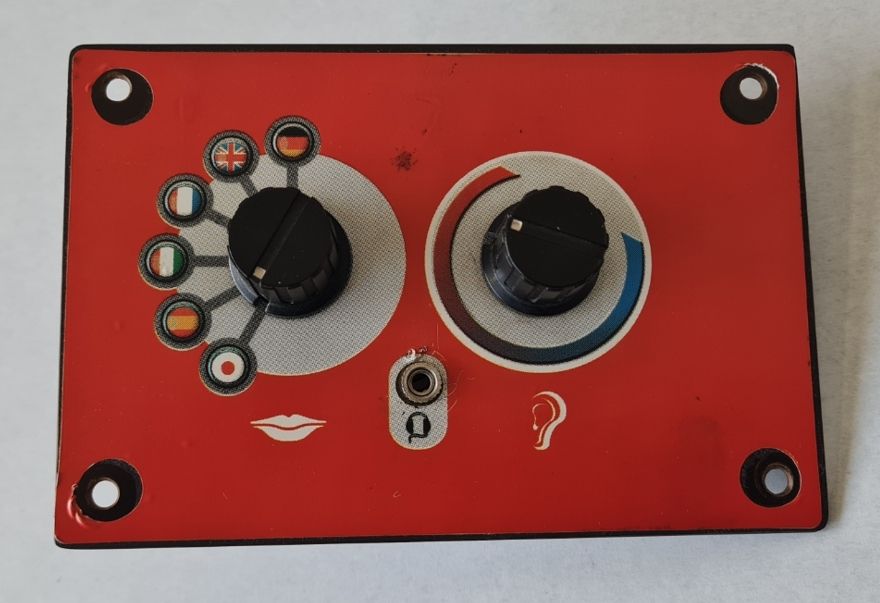
Analogue language selection via mechanical rotary switch and central analogue audio sources. Separate lines were routed to each control unit for each language. This generation was developed independently of WESOLiT and its predecessor organisation, ibes.
Generation 2
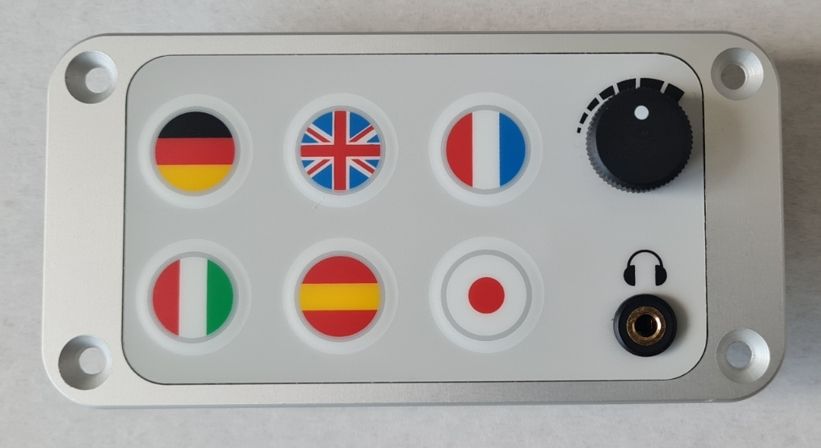
Membrane keypad with language selection and electro-mechanical conversion for analogue source systems. Existing analogue audio sources continued to be used.
Generation 3
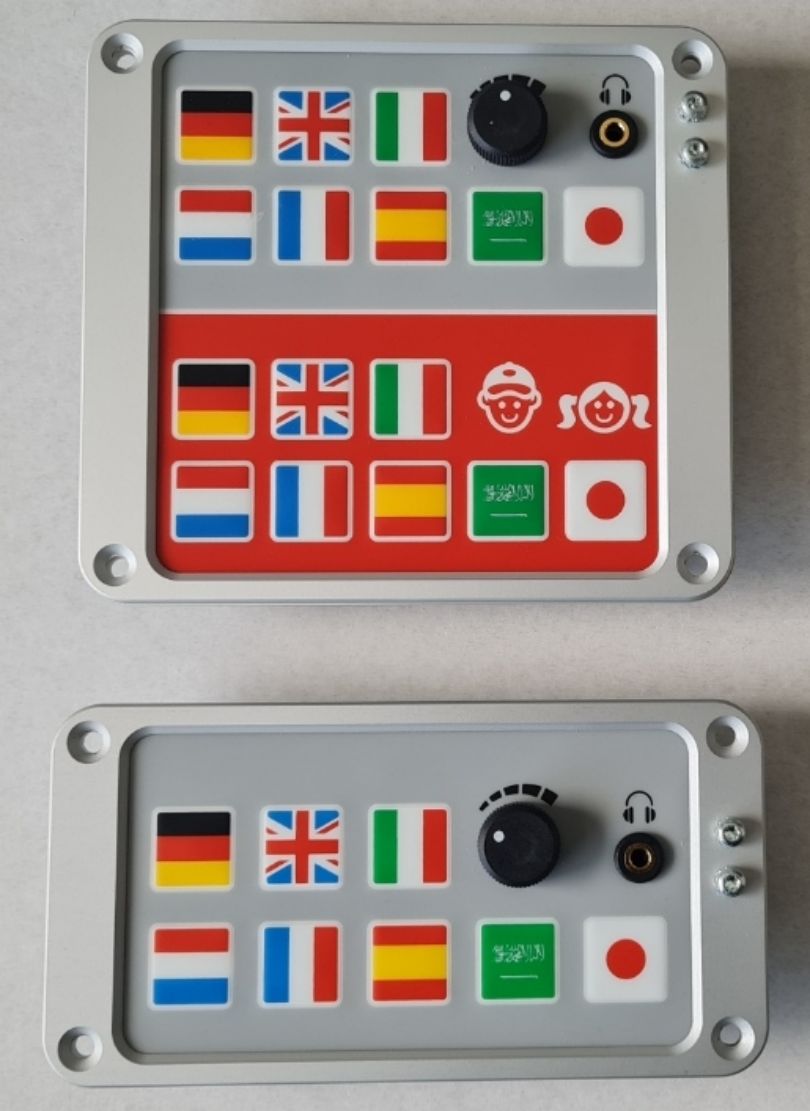
Expansion to up to 16 languages, integrated amplifier in the control unit, and variants with 8 or 16 language channels. Conversion continued to be electro-mechanical for analogue source systems. For the first time, two headphone sockets per control unit were implemented.
Generation 4
WESOLiTvaudiosys-AP
Control unit
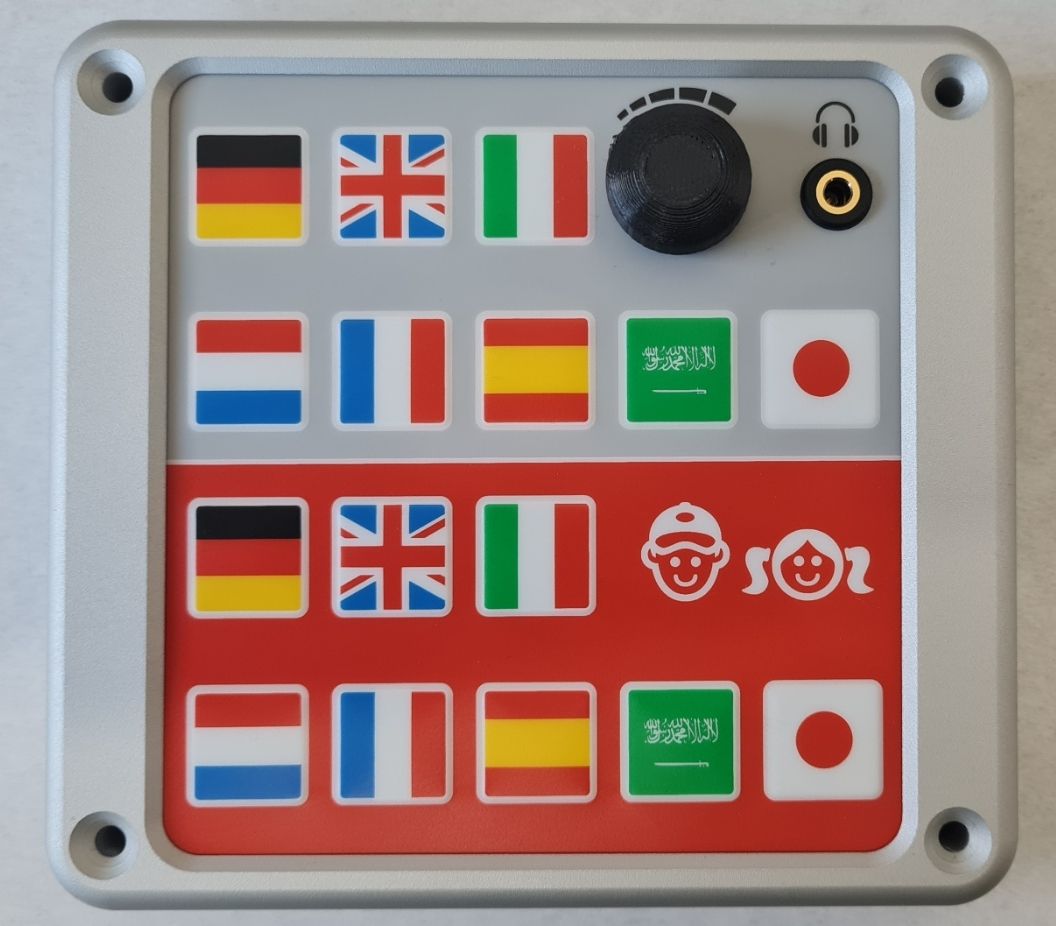
Generation 4
WESOLiTvaudiosys-CU
Central unit
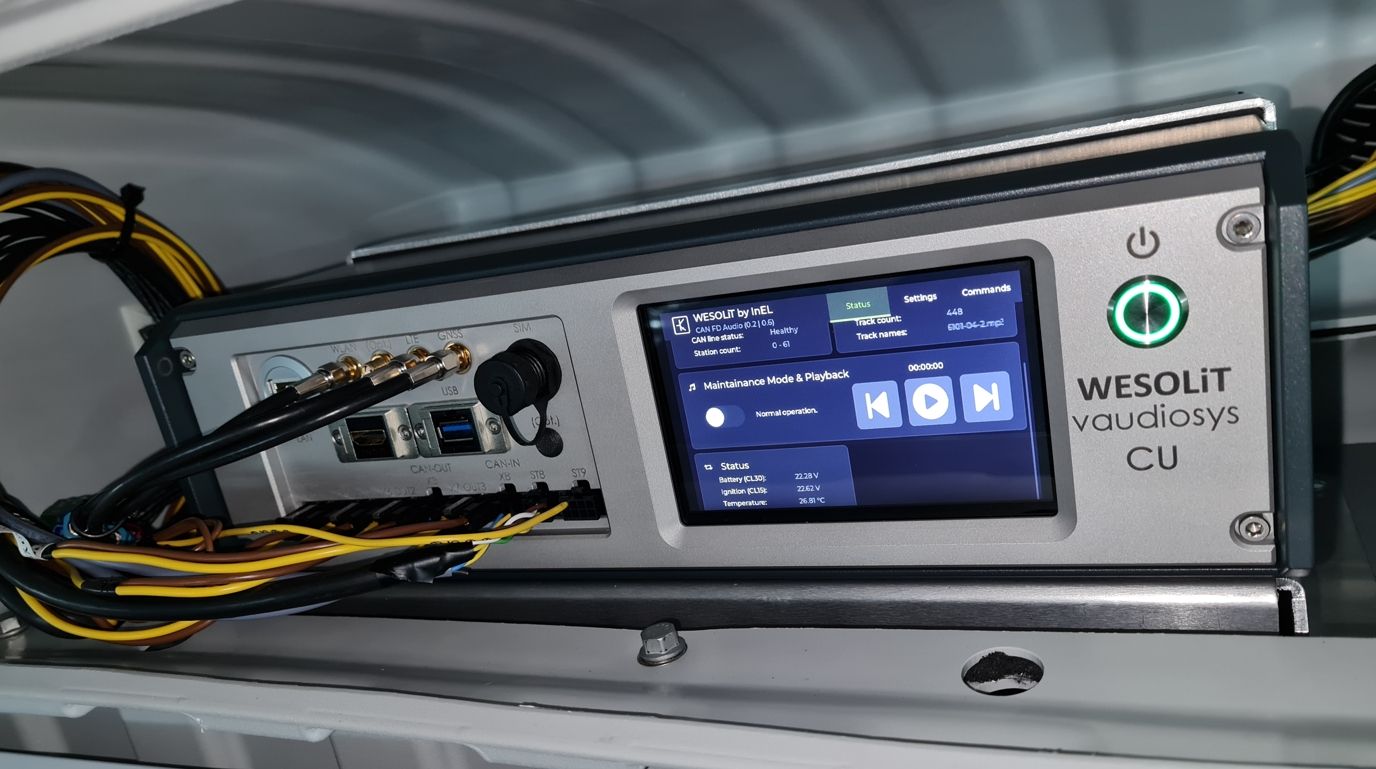
WESOLiTvaudiosys with central unit, digital audio distribution, enclosed control unit housing and significantly reduced cabling. Integration into vehicles by the vehicle manufacturer.
The current version supports up to 16 languages. In addition, internal and external headphone sockets can be operated in parallel.
The provision and organisation of audio content is handled via the WESOLiTvaudiosys Editor.
This generation was first implemented under WESOLiT (predecessor organisation: ibes).
The transition to a digital system architecture marked a fundamental technological leap, enabling scalable and significantly simplified vehicle integration.
WESOLiTvaudiosys was developed for practical use in passenger transport vehicles. The focus was on robust operation, reduced cabling, serviceable design and project-specific integration.
Testing & Integration
Designed for operator environments with a large number of passenger seats, multiple languages and the requirement for a robust, serviceable system solution.
The EMC test was carried out in accordance with ECE R10.06 and passed.
The requirements of ECE R118 were taken into account in the project. Due to the choice of materials and their assessment, no additional testing was required.
The impact test was carried out by Daimler Truck using samples provided and was passed. The housing edges and design were coordinated accordingly in advance.
Documentation & Downloads
Further technical information can be provided on a project-specific basis if required
Technical documentation and further documentation are provided on a project-specific basis and are currently available on request.
Would you like to implement an audio information system for passenger transport vehicles or integrate WESOLiTvaudiosys into your application?
Are you interested in our products?
We would be happy to assist you with technical coordination as well as with integration and implementation in existing or new system platforms.
Product
Organisation
First name
Surname
Subject